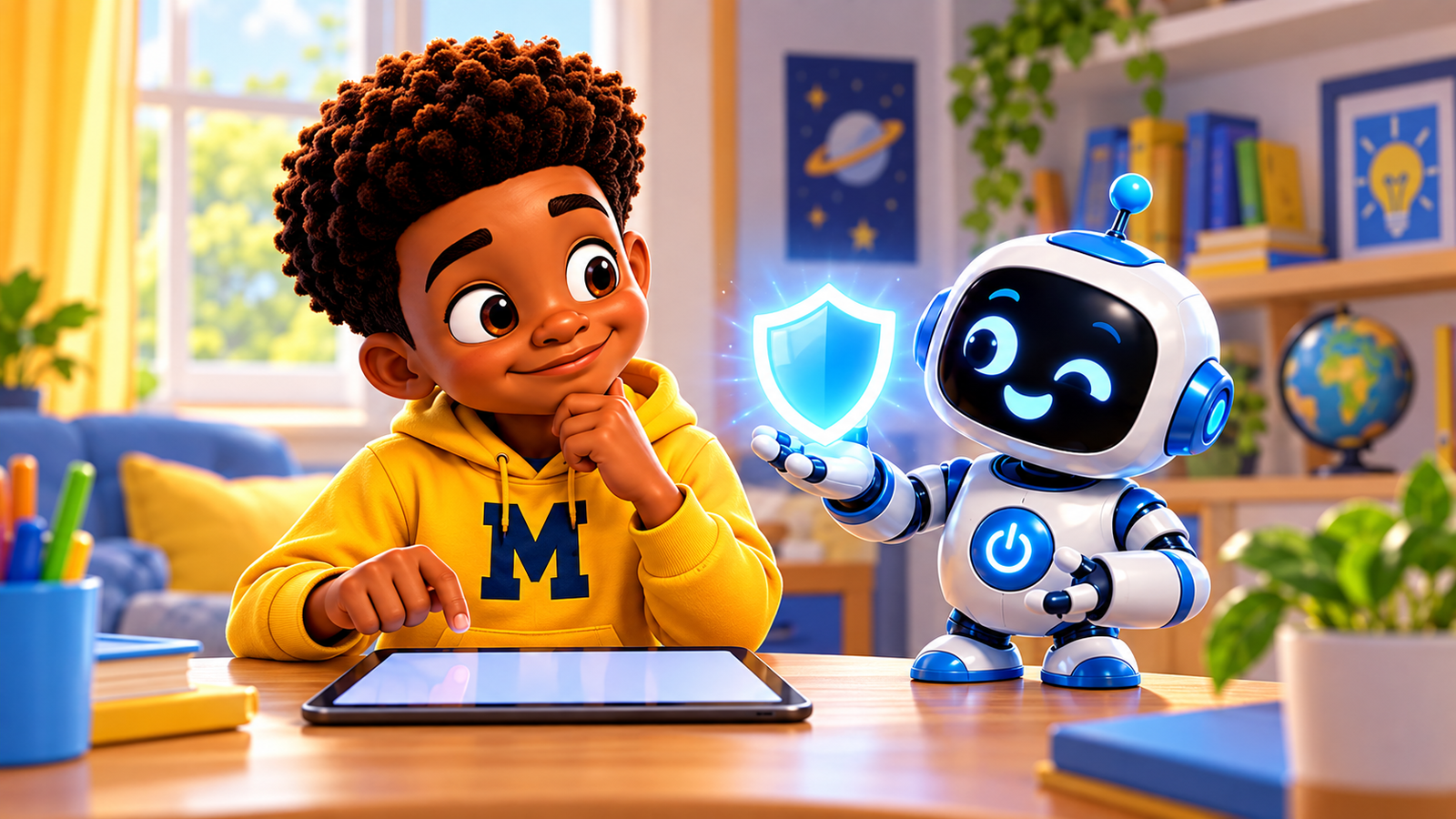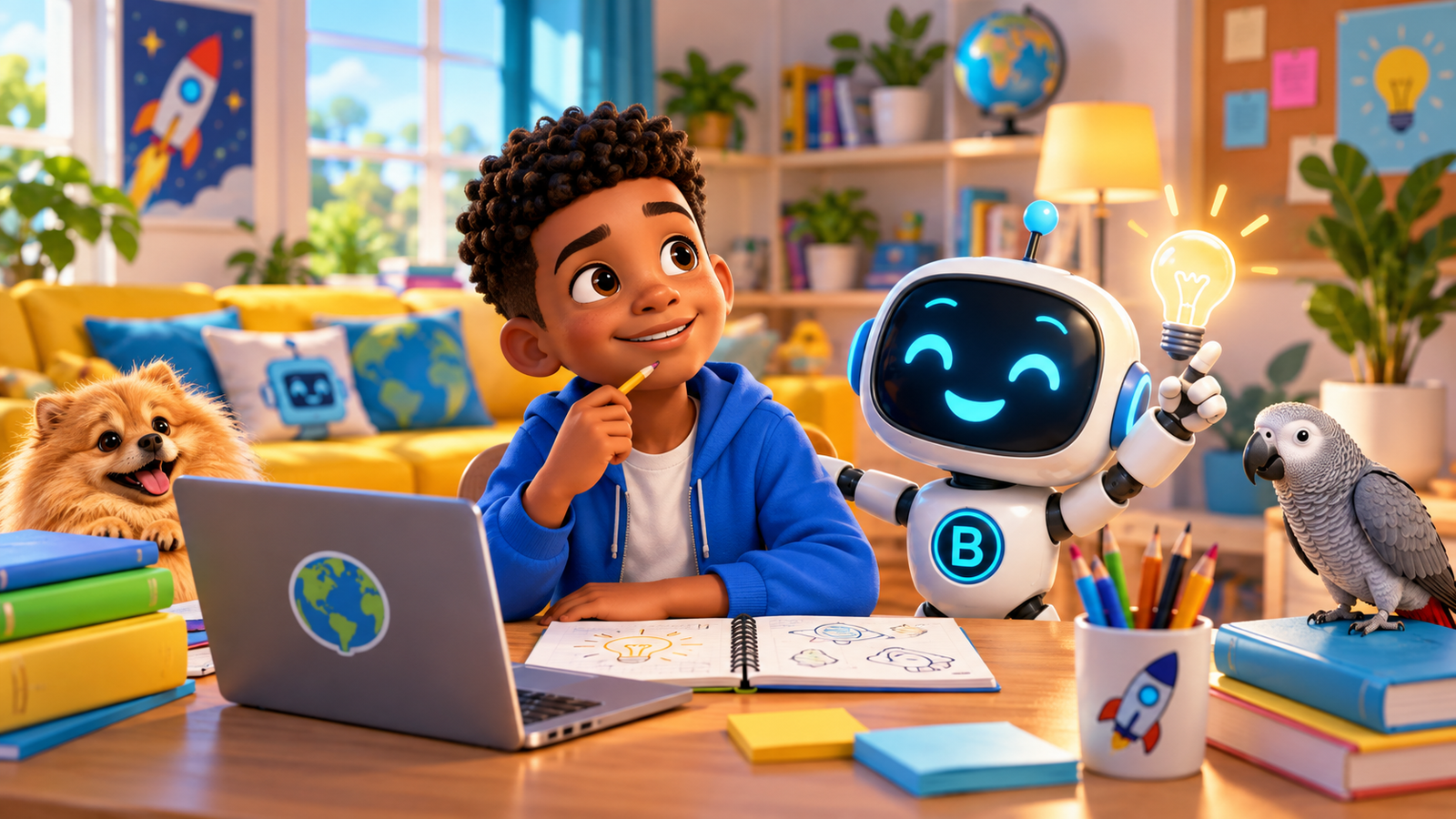
Your Child Is Growing Up With AI. Let’s Help Them Grow Up Ready.
Our children are growing up in a world very different from the one we knew at their age.
Artificial intelligence can answer questions, create pictures, tell stories, help with homework, make music and much more — often in just seconds.
For parents, that can feel exciting and a little overwhelming at the same time.
How much AI is too much? What should children be allowed to share? Can they believe everything an AI tool tells them? And how do we prepare them for technology that is changing so quickly?
The good news is that parents don't need to know everything about AI to guide their children well.
AI Is Already Becoming Part of Their World
Children may encounter AI through school, games, search tools, creative apps, smart devices, videos and conversations with friends. As these tools become more common, learning how to use them wisely will become an important life skill.
That doesn't mean children need unlimited access to AI. It means they need adults who can help them understand what these tools can do, what they cannot do, and when they should stop and ask for help.
Teach Children That AI Can Be Wrong
One of the most important lessons a child can learn is surprisingly simple: an AI answer can sound confident and still be incorrect.
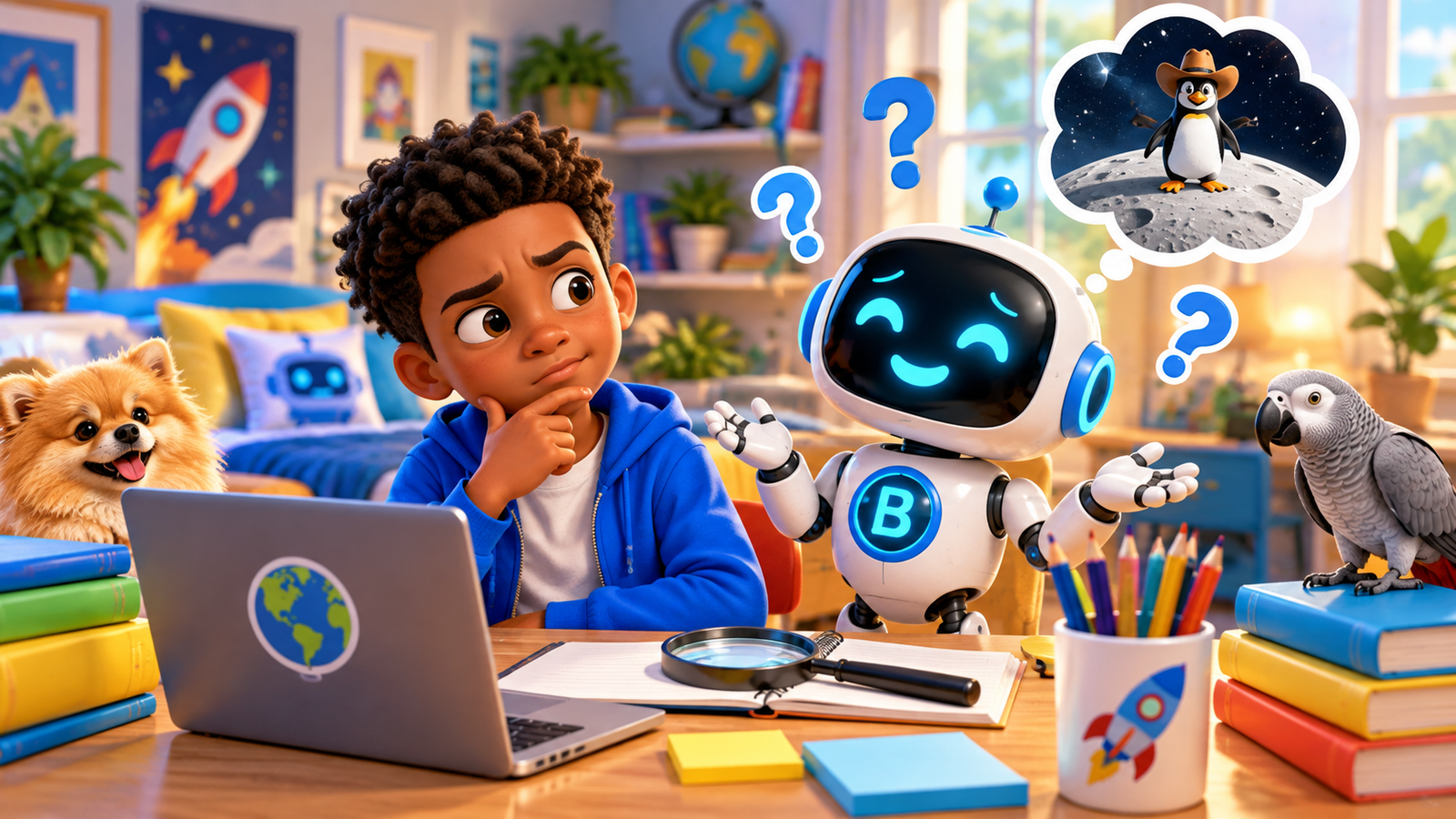
AI can be helpful — but children should still question, think and check.
Instead of teaching children to automatically trust technology, we can teach them to stay curious. Ask another question. Check a book. Talk to a teacher. Ask a parent. Compare information.
Those habits don't just help children use AI. They help children become stronger thinkers.
Stop. Think. Check.
STOP: Don't immediately believe or share an AI answer.
THINK: Does the answer make sense? Is anything confusing or unusual?
CHECK: Ask a trusted adult or compare the information with another reliable source.
Protecting Privacy Starts Early
Young children don't naturally understand why certain information should stay private. That's why conversations about AI should include simple rules about what should never be shared online.
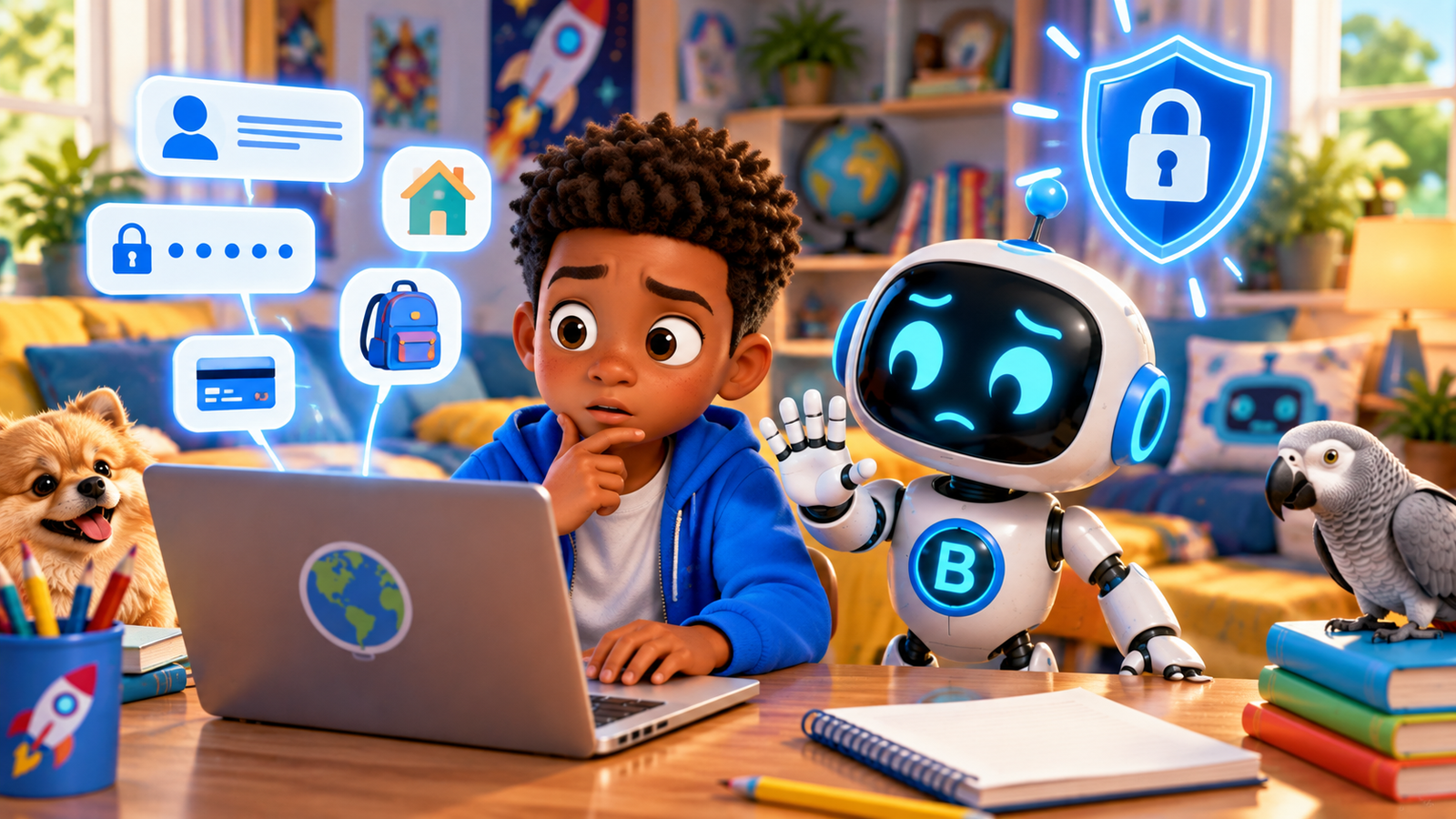
Personal information deserves protection — online and when using AI.
Children can learn not to give an AI tool or chatbot information such as their full name, home address, school, passwords, phone number or other private family information without a parent's permission.
The earlier these habits become normal, the easier it is for children to carry them into the rest of their digital lives.
Use AI With Your Child, Not Just Around Your Child
One of the easiest ways to understand what your child is experiencing is to explore technology together.
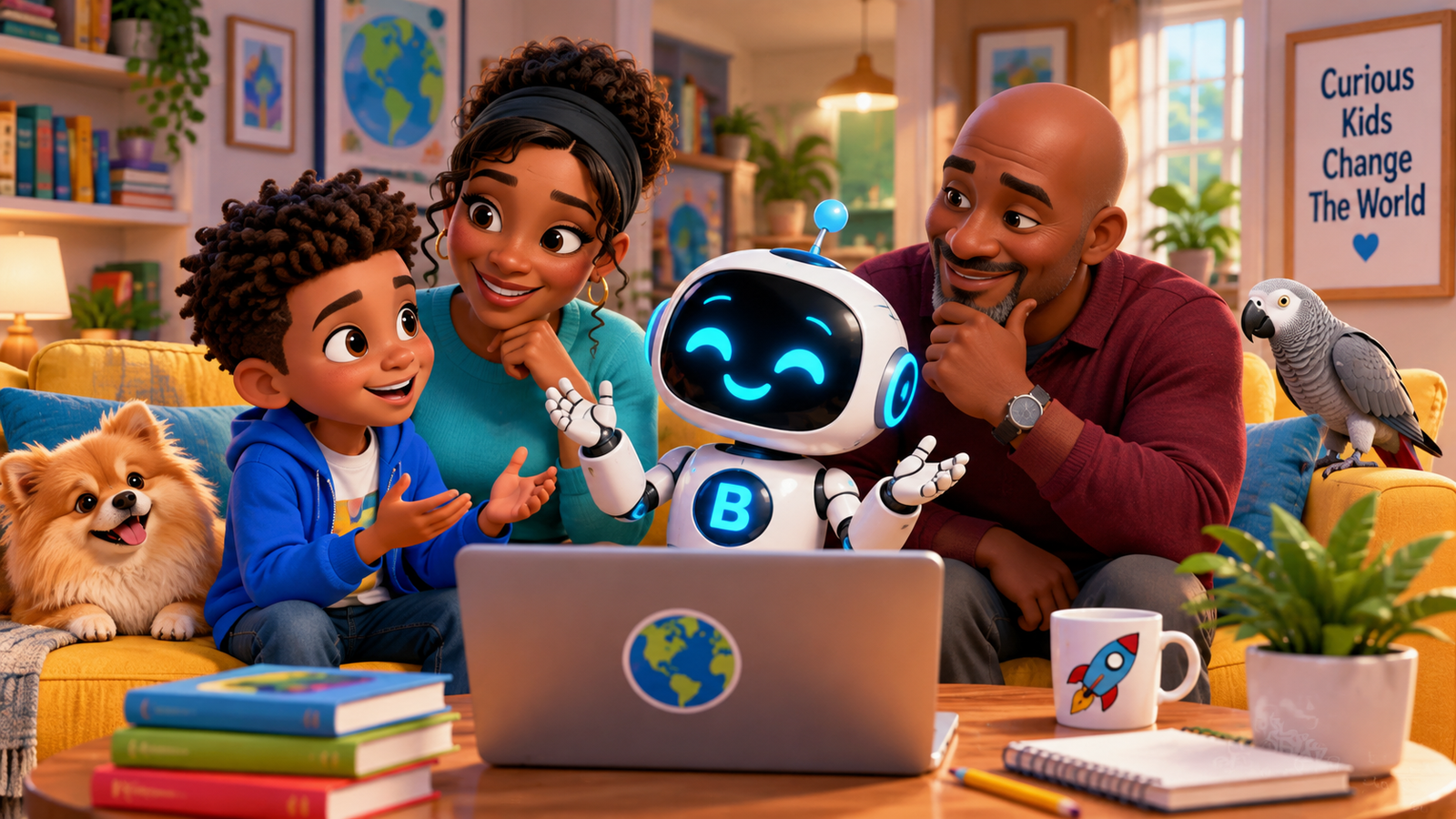
Some of the best AI lessons can begin with a simple family conversation.
Ask AI for a silly story and talk about what it created. Use it to brainstorm an art project. Ask a question about dinosaurs, space or animals and then check the answer together.
These small moments turn technology into an opportunity for conversation rather than something happening behind a closed screen.
Keep Their Brains in the Driver's Seat
AI can be a wonderful helper, but children still need opportunities to imagine, struggle, solve problems, create, read, write, play and think independently.
If a child asks AI to do all the thinking, they miss the most valuable part of learning.
That's why one of the ideas we believe strongly at Marcus & Byte is simple:
Let children think first. Let them wonder. Let them try. Then show them how technology can help them explore an idea further.
You Don't Have to Figure This Out Alone
AI will continue to change. New tools will appear. New questions will come with them.
What matters most isn't knowing every new app or understanding every technical term. It's creating a relationship where your child knows they can come to you when something online feels confusing, uncomfortable, surprising or simply interesting.
Explore together. Ask questions together. Make mistakes together. Keep the conversation going.
Because raising AI-ready children isn't really about raising children who know the most about technology.
It's about raising children who know how to think.
Want Help Getting Started?
Download Your Child Is Growing Up With AI, the free Marcus & Byte Parent's Beginner Guide to raising smart, safe and curious kids in the age of AI.
Get the Free Parent Guide →