My Child Wants to Use AI. Where Do I Start?
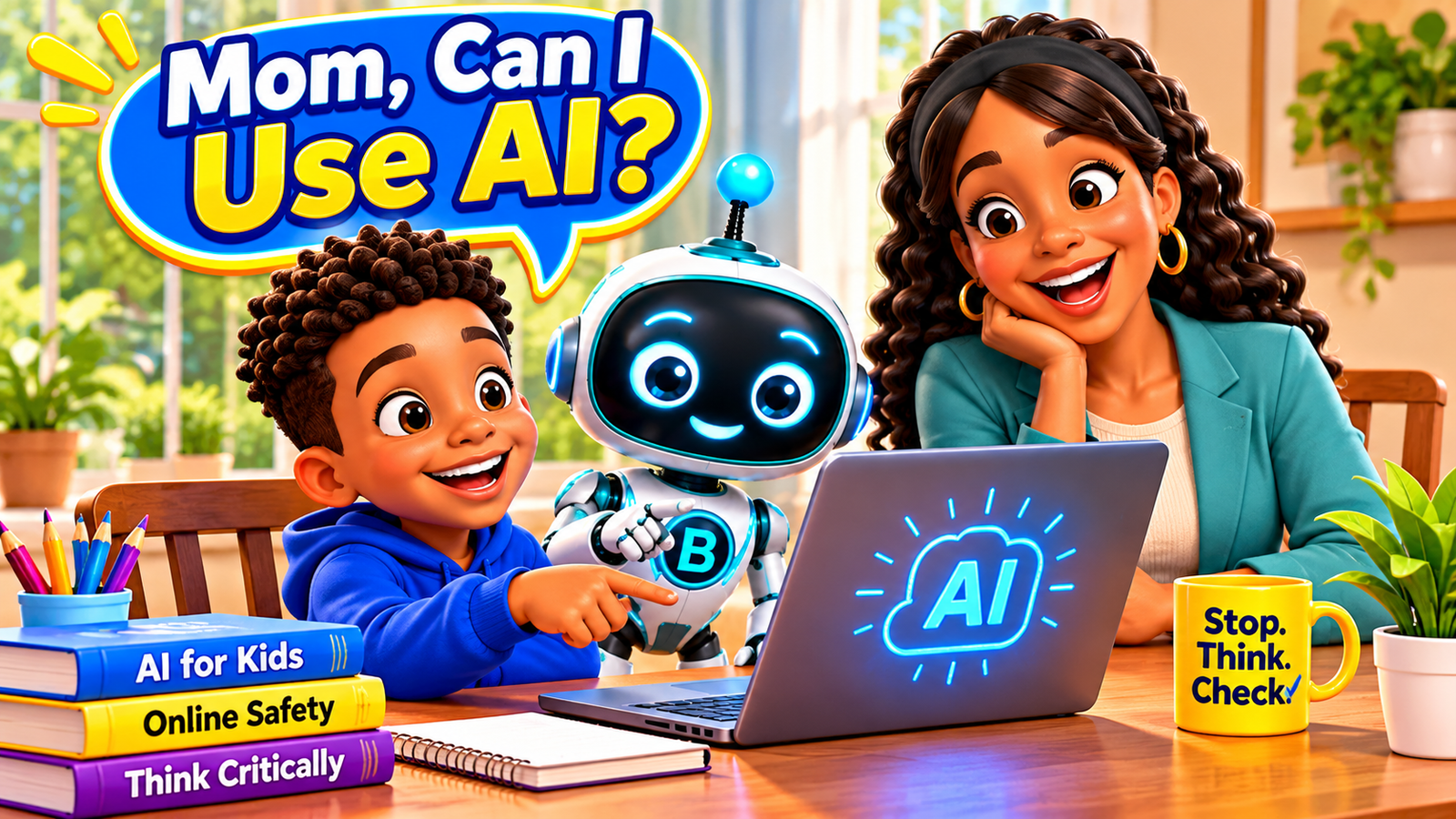
“Mom, Can I Use AI?”
It's a question more parents are beginning to hear. Maybe your child has seen someone talking to a smart speaker, watched an AI-generated character, or heard an older child mention a chatbot. Now they're curious—and you might be wondering: Is my child too young? Is AI safe? Where do I even begin?
I understand those questions. When I created Marcus & Byte Studios, I wasn't simply thinking about technology. I was thinking about children: their curiosity, their questions, and the possibilities waiting for them.
I was also thinking about my mother, Vera M. James. She believed education was one of the greatest gifts you could give a child. She taught our family that learning and responsibility go hand in hand. Helping young children understand the technology shaping their world feels like another way to carry those values forward.
You don't have to be an AI expert to help your child become AI-smart.
You just need a place to start.
1. What Is AI? Explain It Simply
Artificial intelligence, or AI, is technology that can find patterns, make predictions, and generate answers or other content. For a young child, you might say:
“AI is a computer helper that uses patterns to answer questions and help with tasks. But it can make mistakes, so we still use our own brains.”
Children may already encounter AI in voice assistants, recommendations, and certain educational games. But learning about AI is different from using an AI chatbot independently. Many general-purpose chatbots have minimum-age requirements and are not intended for children ages 5–9 to use on their own.
At this age, I recommend adult-guided conversations, hands-on activities, and age-appropriate learning experiences. The goal isn't more screen time. It's understanding.
2. Three Rules Every Child Can Remember: Stop. Think. Check.
STOP.
Before clicking, sharing information, or following instructions from an app, pause. Ask: “Does this seem safe? Should I ask a grown-up?”
THINK.
AI can sound confident even when it gets something wrong. Ask: “Does that answer make sense? What else could be true?”
CHECK.
For important information, check with a trusted adult, teacher, book, or reliable educational source. A confident answer isn't always a correct one.
Try asking your child, “What would you do if a computer told you something that sounded impossible?” Give them time to reason it through. That's the real lesson.
3. Five Fun Ways to Explore AI Together
Activity 1: Play the Pattern Detective
Draw a sequence: circle, square, circle, square. Ask what comes next. Explain that finding patterns is one thing AI can do. Then let your child invent a trickier pattern for you.
Activity 2: Human or Computer?
Talk about tasks computers can help with—like finding directions or sorting information—and things that depend on people, like caring for a friend. Technology can help us without replacing human judgment and relationships.
Activity 3: Become a Fact Detective
Say something playful and incorrect, like “All penguins live in the desert.” Ask your child to investigate using a trusted children's reference. Explain that AI can also produce incorrect information.
Activity 4: Invent Your Own Robot
Grab paper and crayons. Ask your child to design a robot that solves an everyday problem. Maybe it organizes toys or reminds the family to water plants. Then ask: “What would it need to know? What mistakes might it make?”
Activity 5: Practice Keeping Information Private
Imagine a game asks for your child's address, school, password, or photograph. What should they do? Practice stopping and asking a trusted adult before sharing anything personal.
4. What Should Parents Watch Out For?
- Personal information: Don't let children enter private family details, passwords, identifying information, or photos into AI tools.
- Incorrect answers: AI-generated responses can be wrong even when they sound convincing.
- Age requirements: Check each service's rules. Many popular chatbots are not appropriate for independent use by young children.
- Screen-time balance: Keep reading, imaginative play, hands-on discovery, and family conversations at the center.
- Open communication: If something online confuses or worries your child, make it easy for them to tell you.
Being involved matters more than knowing every technical term.
5. Learn Through Play With Marcus & Byte
One reason I created Marcus & Byte Studios was to make AI education less intimidating for families. Marcus is a curious eight-year-old who asks questions. Byte is his friendly robot companion—and Byte doesn't always get everything right. That's intentional! Children learn that they can question a computer's answer instead of automatically trusting it.
And Marcus and Byte aren't the only detectives. Your child is part of the adventure, too.
- Free Brainpower Detective Academy: Explore observation, reasoning, and problem-solving through playful detective activities.
- Free activities: Find more ways to practice curiosity and critical thinking.
- Marcus & Byte AI Activity Workbook: Enjoy creative, hands-on activities away from screens.
6. You Don't Have to Know Everything About AI
Your child doesn't need a technology expert sitting beside them. They need someone who listens, encourages curiosity, and helps them recognize when something doesn't seem right.
I think about my mother often when I reflect on this mission. She didn't have AI to help raise our family. What she had was determination, love, and an unwavering belief in education. Those values still matter.
Technology will keep changing. But curiosity, kindness, responsibility, and critical thinking will always be worth teaching.
Our children don't need to know everything about AI today. They just need us to help them ask the right questions tomorrow.
Brains First. Bytes Second.
Start Your Family's AI Learning Adventure
Ready to explore together? Start with our free Brainpower Detective Academy, browse learning activities, or discover the Marcus & Byte AI Activity Workbook.
Want to know why I started this mission? Read my founder story.
About the Author
Vanessa R. James is the founder of Marcus & Byte Studios, which helps children ages 5–9 explore AI, online safety, creativity, and critical thinking through stories, games, and hands-on learning. Inspired by her mother Vera M. James's dedication to education and family, Vanessa created Marcus & Byte Studios to help prepare young learners for an AI-powered future.